by Great Grandmother Mary Lyons
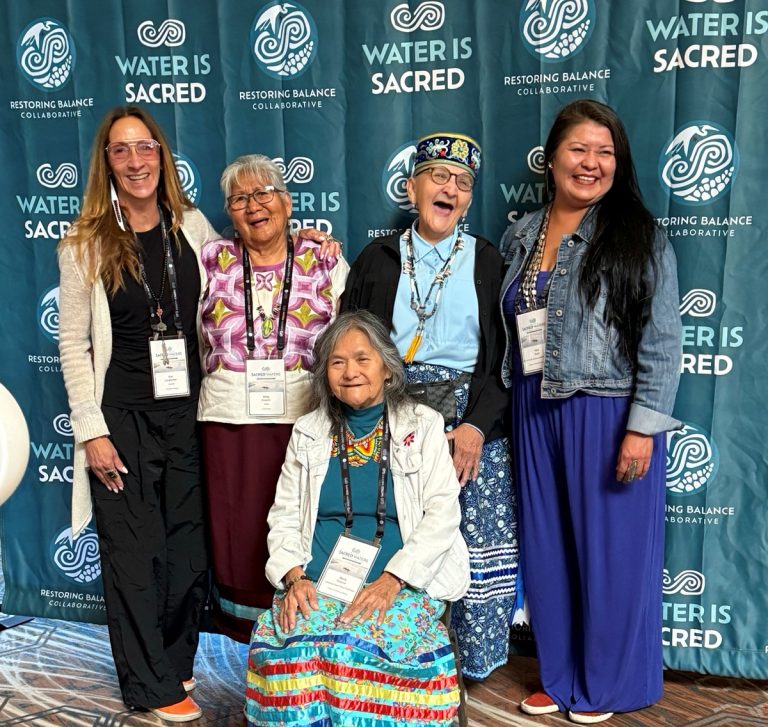
The four-day Sacred Waters Gathering, co-hosted by the Pueblo of Isleta and the Restoring Balance Collaborative (RBC), brought together Indigenous leaders, knowledge holders, environmental practitioners, and youth from more than 40 Indigenous nations across the United States, Canada, Aotearoa (New Zealand), Australia, and the Pacific. The gathering focused on strengthening Indigenous-led approaches to water stewardship, climate resilience, ecosystem restoration, and community health through shared knowledge, relationship building, and collaborative action.
A central theme throughout the conference was the urgent ecological decline of the Rio Grande. Participants described the river’s transition from a source of food, ceremony, and cultural identity to one increasingly affected by drought, contamination, reduced snowpack, and declining water quality. Tribal leaders emphasized that current restoration efforts are insufficient and called for Indigenous leadership to guide long-term protection and restoration of the watershed.
The conference opened with land acknowledgments and traditional protocols, including a water blessing and grounding ceremony led by Pueblo elders. Speakers emphasized respect for Indigenous knowledge systems, relational accountability, and creating a space centered on listening, collaboration, and shared learning.
The Restoring Balance Collaborative presented its Indigenous-led Theory of Change, highlighting its growth to 48 members representing more than 40 nations. The framework emphasizes strengthening Indigenous leadership, expanding knowledge exchange, and influencing policy by embedding Indigenous values into environmental governance and public decision-making.
A keynote exchange with leaders from the Whanganui River in Aotearoa showcased the successful recognition of the Whanganui River as a legal person through the Te Awa Tupua Act. Presenters shared the Māori worldview that the river is a living ancestor, demonstrating how Indigenous law, governance, education, and cultural revitalization have strengthened both ecological protection and community wellbeing. The exchange reinforced opportunities to adapt similar approaches to water stewardship in the United States and included plans for a 2027 youth exchange between Pueblo communities and the Whanganui River tribes.
Regional presentations highlighted common environmental challenges facing Indigenous communities, including water contamination, extractive industries, dams, nuclear development, mining, and increasing demands from energy-intensive infrastructure such as data centers. Speakers from the Haudenosaunee Confederacy, Native Hawaiian organizations, Pueblo communities, and Aotearoa emphasized that protecting water requires restoring Indigenous governance, cultural practices, and reciprocal relationships with the natural world.
Throughout the conference, participants reinforced several shared priorities:
* Center Indigenous knowledge, cultural values, and traditional ecological practices in environmental decision-making.
* Strengthen collaboration among Indigenous nations through continued exchanges, storytelling, and shared learning.
* Advance legal, policy, and funding mechanisms that recognize Indigenous stewardship and protect waterways.
* Support youth leadership, language revitalization, and intergenerational knowledge transfer.
* Restore healthy ecosystems by reconnecting communities to land, water, traditional agriculture, and ceremonial practices.
The gathering concluded with commitments to continue international partnerships, expand regional working groups, develop educational and policy resources, support community-based restoration projects, and prepare for future exchanges, including the 2027 delegation to Aotearoa. Overall, the conference affirmed that restoring the health of rivers and watersheds is inseparable from restoring Indigenous leadership, cultural identity, and relationships with the natural world.
by Talia Boyd
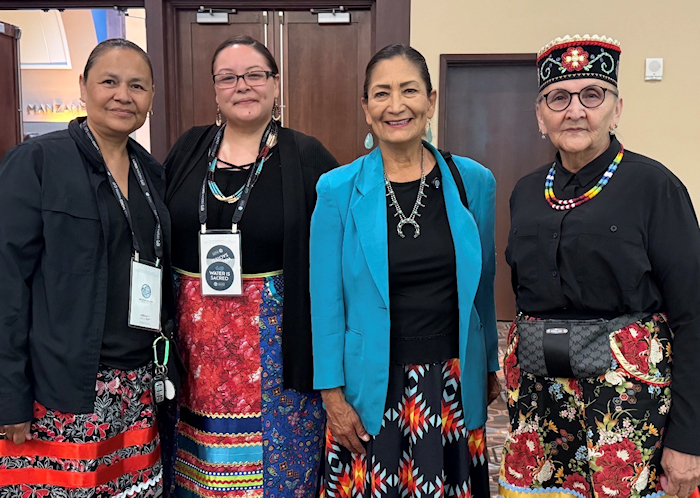
Our Keep it in the Ground Mining Organizer, Talia Boyd (Diné), participated in the Meeting of Sacred Waters at Isleta Pueblo from June 22-25, 2026. A Meeting of Sacred Waters is a global gathering with over 40 Indigenous Nations, organizations, and communities across Turtle Island, Aotearoa (New Zealand), Australia, and the Pacific that come together for an interactive forum that includes: Indigenous keynote presenters from across the Pacific, Indigenous leader panels, case examples of Indigenous-led policy, law, resource stewardship and guardianship, concurrent sessions, and small and large group discussions. This year’s theme: Remembering the Past into the Present highlighted Indigenous-led solutions in support of ancestral waters and lands. “Indigenous-led knowledge systems are needed to inform legal, regulatory, policy, and practical approaches to ensure an abundant future.”
Talia was invited to present with Dr. Shannon Seneca (Seneca) and Dr. Tommy Rock (Diné) on a panel titled: “Nuclear Chain’s Continued Impact on our Land & Water” where they discussed the adverse impacts from the nuclear fuel chain from the mining, milling, transportation, processing, enrichment, waste, and storage, from energy and weapons. Almost all uranium globally is on or near Indigenous lands. They highlighted Indigenous frontline voices from Diné and Seneca homelands, including the Havasupai, Ute Mountain Ute, Laguna Pueblo, San Ildefonso Pueblo, Spokane, Cherokee, Lakota, Iñupiaq village of Elim and beyond.
Nuclear Chain’s Continued Impact on our Land & Water Session Summary:
“The United States government began dispersing radioactivity throughout our land and waterways during the race for arms in 1942 as the Manhattan Project drove the nuclear weapons complex worldwide. This era was delivered with a campaign for clean, carbon-free energy and a nuclear fuel cycle that in reality left legacy radioactive waste littered across Turtle Island. Our Tribal communities continue to fight for clean-up of abandoned uranium mines, against relocation due to milling activities, and removal of high-level waste. As we work towards remediating radiologically contaminated waters and soils, nuclear energy is becoming a more popular solution to meet the energy requirements of data centers emerging across all landscapes. It is imperative that we identify solutions for environmental contamination, community health impacts, and long-term storage of high-level radioactive waste. Indigenous-led collaborations focused far into the future, grounded in stewardship-of-the-land principles, are necessary to generate innovative solutions. We will stand together to ensure that all of our communities from mining through waste management are appropriately represented.”
Impacted tribal communities are on the frontlines in defending our Mother Earth and the next seven generations from the increased environmental deregulation and fast-tracking of mines, and the accelerated federal funding for uranium and other transition mineral mining. The Diné are confronting radioactive and toxic waste from over 1,000 abandoned uranium mines, including active transportation of uranium and new proposed uranium mines. And the Seneca are confronting the West Valley Demonstration Project where high-level nuclear waste contaminates their waterways and homelands. Indigenous lands and peoples are not sacrifice zones for the military-industrial complex and the so-called “Green Energy Transition”. We will continue to organize and build solidarity between our tribal communities. Keep it in the Ground.