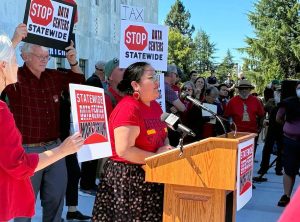
Brenna Yellowthunder (Lead Coordinator, KIITG) spoke at the Oregon Data Center Moratorium Rally on Sept. 8 in Oregon’s capitol, Salem. Alongside Governor Kotek, they emphasized the effect hyper scale data centers have on rivers and salmon, a cornerstone of local tribes culture. They also joined the lobby day, urging state legislators to support a 3-year moratorium on data centers. The event was organized by the Columbia Riverkeepers, Food and Water Watch, and more.
Following the largest pipeline spill in Wisconsin last month, by Canadian pipeline giant Embridge, the Bad River Band of Lake Superior Ojibwe declared a disaster for their reservation after the spill, and Chairperson Liz Arbuckle said, “This is what we said would happen.”
The break triggered a massive spill of 1.3 million gallons of natural gas liquids. Federal data shows the leak is the largest reported oil and gas spill ever in Wisconsin.
Michigan’s 12 federally recognized tribes led the Mackinac Bridge Walk, with several tribal chairs, chiefs, and presidents joining together to activate the ancestral Three Fires Confederacy’s first collective call to action.
On Labor Day, Sept. 7, 2026, roughly 34,000 people participated in the Mackinac Bridge Walk, with Michigan tribes leading a unified stand against Line 5.
Arbuckle said the tribe had warned that the reroute would still put their reservation at risk. “This is our UnCeded Territory,” she said. “This is where our people have always hunted, fished, gathered and lived and all of that’s at risk.” Tribal leaders say the incident underscores a truth the Anishinaabe have voiced for years: Enbridge’s safety practices rely on luck, not containment.
The Mackinac Bridge Walk was a ceremony, not just a demonstration, to honor the responsibility to the water and remind the world that Anishinaabe people are still here, still protecting their homelands.
Joe Bates, an environmental activist and member of the Bad River Band of Lake Superior Ojibwe, captured drone footage of the leak after hearing reports from community members.
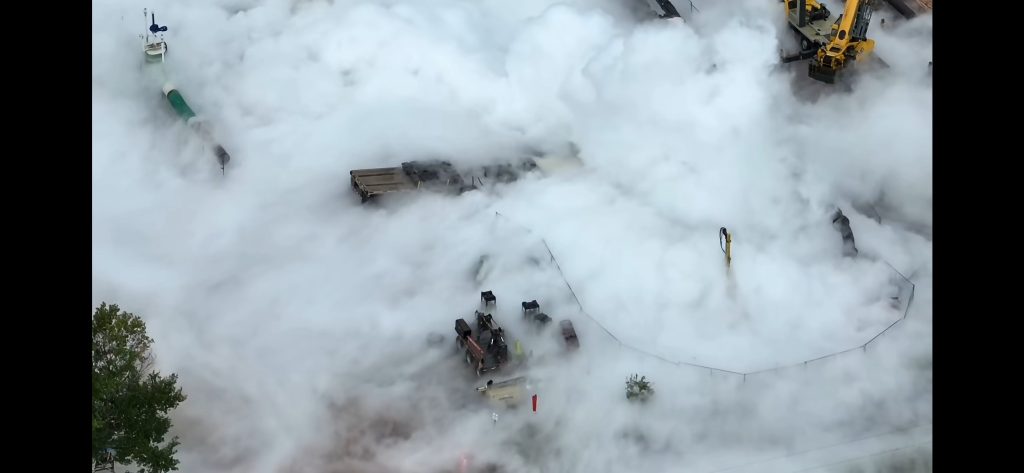
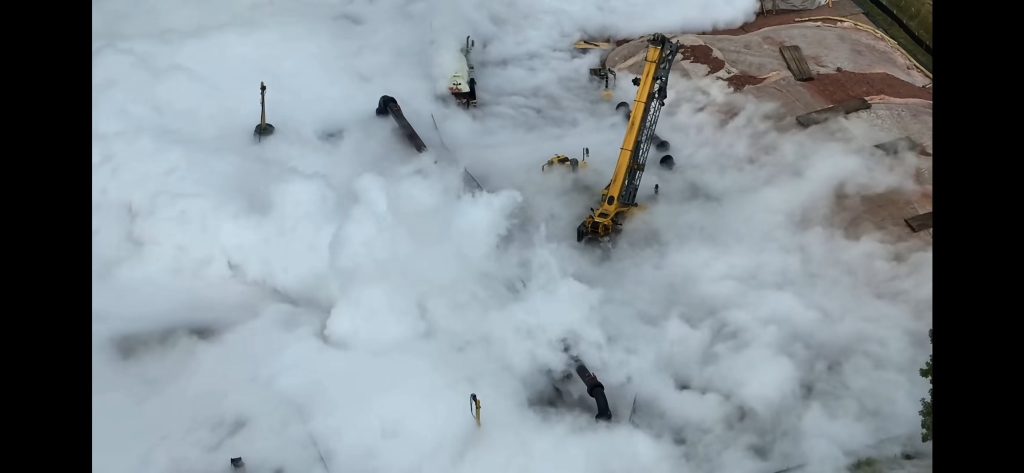
We ask you to consider supporting the local community on the ground, who has asked us to share this fundraiser for an infrared drone. Observers need this equipment to document pipeline leaks and highlight the risks to Indigenous waterways. Joe Bates is one of the people who broke the story about Enbridge’s leaking pipeline with his drone footage. He has frequently used drone footage to document conditions along Enbridge’s Line 5 corridor, including construction, erosion concerns, and suspected drilling-fluid releases. But an infrared drone would let observers see what the naked eye cannot: gas plumes, thermal anomalies, and leaks that would otherwise go undetected.
The community is asking for support so that the documentation can continue. Please donate if you can. Share if you cannot.
Click here to make a secure donation to support the community.