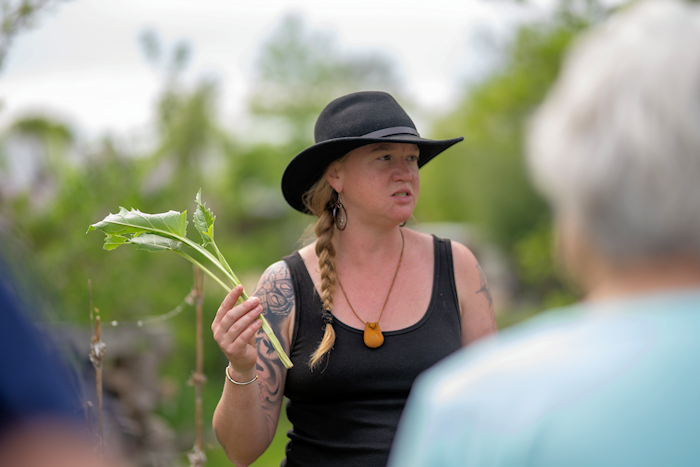
Spring always keeps us busy at the IEN Teaching Garden, and this year was no exception! From planting, weeding, watering, and caring for the gardens to welcoming visitors and hosting community events, the season was full of opportunities to learn, connect, and celebrate our relationships with the land and one another.
We kicked off the season with our annual Roots, Shoots & Seeds Celebration, welcoming friends, families, and neighbors to the IEN Teaching Garden for a day of music, good food, and community.
One of the highlights of the day was sharing plants and seeds with community members to help grow gardens throughout the region. Together, we gave away more than 300 seedlings, including tomatoes, tomatillos, lettuce, and a variety of native medicines and culturally important plants such as prairie sage, sweetgrass, and red raspberries. We also distributed over 200 seed packets from our Community Seed Library, helping more people grow healthy food and traditional medicines at home.
It was wonderful to see so many familiar and new faces gathering in the garden, sharing stories, exchanging gardening tips, and celebrating another growing season together.
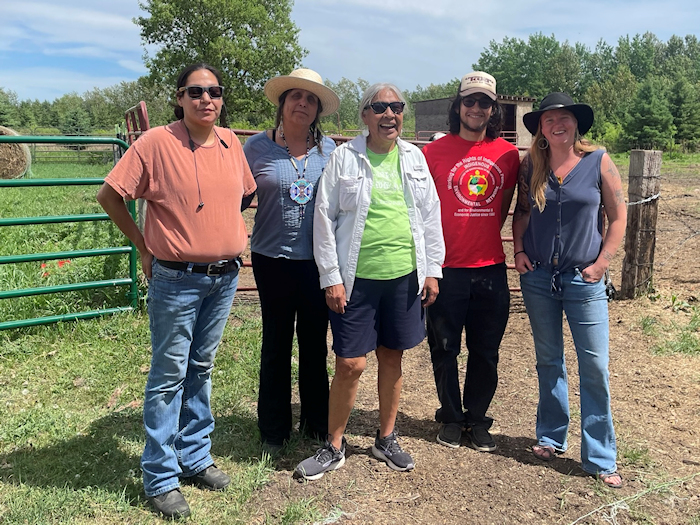
In early June, Garden Manager Kaylee Carnahan and Garden Apprentice DJ Seki welcomed IJT Interim Coordinator Missy Crowe to the IEN Teaching Garden to see how our gitigaan continues to grow as an example of Indigenous Just Transition in a semi-urban/post-industrial setting.
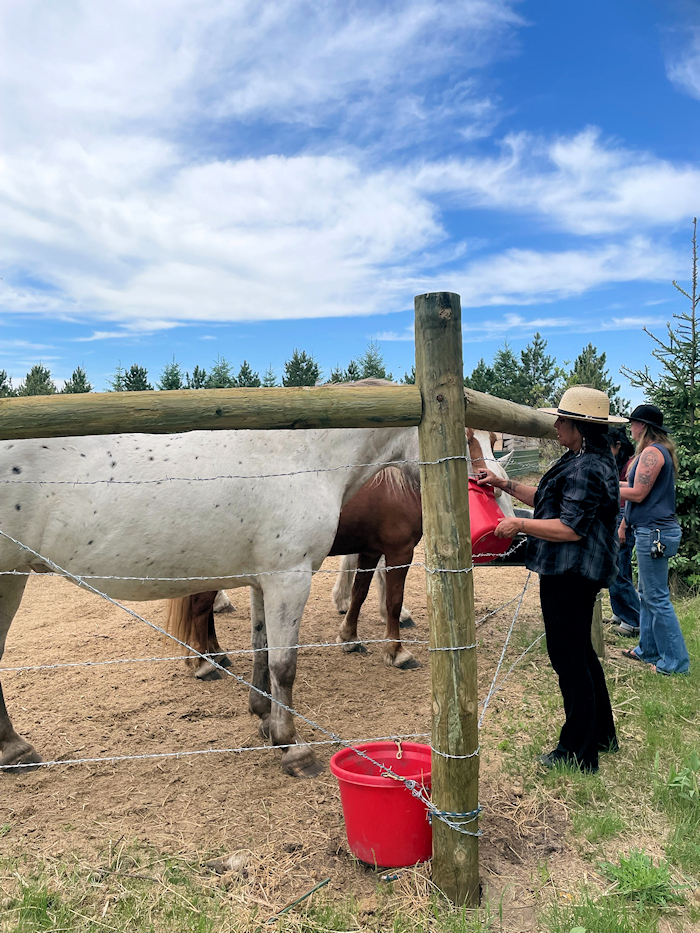
After touring the garden, we traveled to visit the Anishinaabe Agriculture Institute (AAI), where we learned about the incredible work they are doing to strengthen Indigenous food systems and land-based economies. We toured their horse-powered hemp farm, where they are breeding northern-adapted hemp varieties, explored their gardens and hemp processing space, and admired a beautiful mural that shares the story of hemp and its importance.
Our visit was both inspiring and energizing. AAI is a powerful example of how traditional knowledge, innovation, art, culture, and community leadership can come together to build a healthier future.
One of the most exciting projects this spring brought together students from the University of Minnesota, interns and students from Leech Lake Tribal College, and community members for a day of hands-on learning and environmental responsibility.
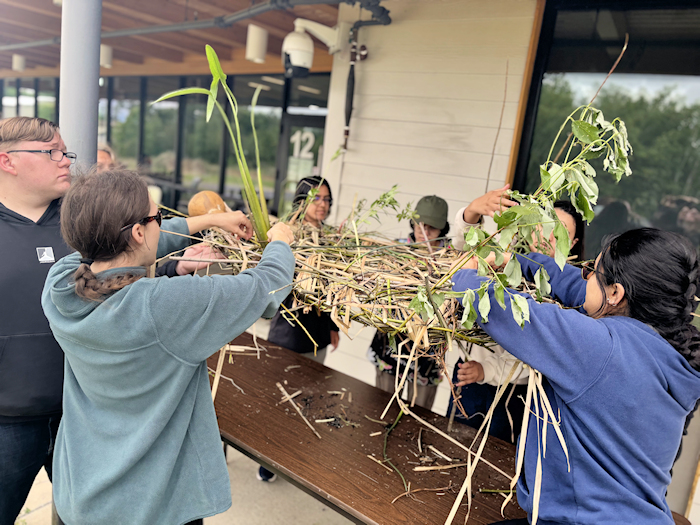
Working together, participants created floating bioremediation mats for Lake Irvine as part of the project Nanaandawitoon Nibi Miinawaa Manoomin—Healing Water and Wild Rice.
Lake Irvine is an important part of the Mississippi Chain of Lakes and is home to both the IEN Teaching Garden and a small population of manoomin (wild rice). Because the lake has high levels of nitrogen and phosphorus, it has been listed as impaired by the Minnesota Pollution Control Agency, making restoration efforts especially important.
Using traditional willow and cattail weaving techniques, participants built floating mats that will support native wetland plants. These living islands help remove excess nutrients from the water while creating habitat for beneficial microorganisms that naturally improve water quality.
Later this year, students from both colleges will return to monitor the floating mats, measure how much pollution has been removed from the water, and determine whether the harvested plant material can be safely composted for future restoration efforts. This collaborative project beautifully demonstrates how Indigenous knowledge, scientific research, and community partnerships can come together to restore healthy waters and protect manoomin for future generations. It is a powerful reminder that healing our waters happens through many hands, shared knowledge, and a collective commitment to caring for the land. We are grateful to everyone who contributed their time, energy, and expertise to this important work.
As summer continues, we’re excited to keep growing, learning, and sharing together. Miigwech to everyone who has volunteered, attended an event, planted a seed, or stopped by the garden this season. Your support helps our community and our gardens continue to flourish.